Showing posts sorted by relevance for query mary paterson. Sort by date Show all posts

National Platform - Day One - 18th April 2009

National Theatre Studio

18 April 2009


Over two days, the SPILL National Platform presented 20 performance works by emerging artists, selected from almost 300 applications. The works reflected an incredibly diverse range of forms and themes: durational and installation work, engagements with the conventions of theatre, interactive provocations, and autobiographical narrative.


As writers, we knew we would be unable to respond in detail to all of the work, but we also wanted to avoid imposing any selective criteria, even a random one, on which work was covered. We decided in advance of the Platform that we would impose a constraint on our responses. This would provide a structure for giving equal space to each of the performances and would make the most of our limited time. We decided that we would respond to each of the works, and we would limit our response to the space of a 3x5 index card.


We like the idea that each of the identical cards seems analogous to the opportunity offered to the emerging artists: a blank slot, to be filled individually, but unavoidably to be experienced side-by-side with the rest of the programme, as part of an assembly or collection of material.


Although for the most part we have prepared our cards after the event, there’s also something about this format that reflects the experience of writing: taking notes in the dark, collecting fragments and impressions and responses. Trying to capture not just the event on stage but our internal journeys. Thinking always, at every moment, even before the moment has finished, about how to translate into words the transient and complex experience.


These cards are only scraps, only partial and inadequate records of the events of the weekend, but we hope something of the extraordinary and boundless diversity of work is reflected by these responses. Perhaps they can stand as the beginning of a discussion – please add your own comments below.


Theron Schmidt


Please click on each image to view larger.

Please Note: You made need to zoom out/in using your browser to view the image in a suitable size.


Mamoru Iriguchi - Pregnant?!

by Alex Eisenberg


Madeleine Trigg - Sutre

by Mary Paterson


Elyssa Livergant - A Kiss From the Last Red Squirrel
by Mary Kate Connolly


Neil Trefor Hughes
Minimalist Music for Young People
by Alex Eisenberg
Alex continues his response to this work here.


Claire Adams -Photopollution
By Rachel Lois Clapham


Catalina Garces - Identi-ffy
By Rachel Lois Clapham


Mitch and Parry

I Host You, Now Tonight, Let Me Show You How

by Alex Eisenberg


Alex continues his response to Mitch and Parry here.

Amanda Couch - Dust Passing
by Mary Paterson


Other, Other, Other
Long Winded in Five Parts
by Eleanor Hadley Kershaw


Nathan Walker - Bad Bad
by Mary Kate Connolly

To read cards from day two click here.

The writers participating were Mary Kate Connolly, Rachel Lois Clapham, Alex Eisenberg, Eleanor Hadley Kershaw, Mary Paterson and Theron Schmidt.

National Platform - Day Two - 19 April 2009

National Theatre Studio

19 April 2009


Over two days, the SPILL National Platform presented 20 performance works by emerging artists, selected from almost 300 applications. The works reflected an incredibly diverse range of forms and themes: durational and installation work, engagements with the conventions of theatre, interactive provocations, and autobiographical narrative.


As writers, we knew we would be unable to respond in detail to all of the work, but we also wanted to avoid imposing any selective criteria, even a random one, on which work was covered. We decided in advance of the Platform that we would impose a constraint on our responses. This would provide a structure for giving equal space to each of the performances and would make the most of our limited time. We decided that we would respond to each of the works, and we would limit our response to the space of a 3x5 index card.


We like the idea that each of the identical cards seems analogous to the opportunity offered to the emerging artists: a blank slot, to be filled individually, but unavoidably to be experienced side-by-side with the rest of the programme, as part of an assembly or collection of material.


Although for the most part we have prepared our cards after the event, there’s also something about this format that reflects the experience of writing: taking notes in the dark, collecting fragments and impressions and responses. Trying to capture not just the event on stage but our internal journeys. Thinking always, at every moment, even before the moment has finished, about how to translate into words the transient and complex experience.


These cards are only scraps, only partial and inadequate records of the events of the weekend, but we hope something of the extraordinary and boundless diversity of work is reflected by these responses. Perhaps they can stand as the beginning of a discussion – please add your own comments below.


Theron Schmidt


Please click on each image to view larger.

Note: You made need to zoom out/in using your browser to view the image in a suitable size.


Victoria Pratt - Chasing Next Door's Cat

by Mary Paterson


Sohail Khan - Stress Positioning
by Rachel Lois Clapham


Simon Bowes - Kings of England
by Alex Eisenberg

Alex continues his response to this work here.


Silvia Rimat - Being Here While Not Being Here
by Theron Schmidt


Rasp Thorne - Blinded Descention
by Rachel Lois Clapham


Nicola Conibere - Count One
by Mary Paterson


Simone Kenyon and Neil Callaghan
To Begin Where I Am...Mokado
by Alex Eisenberg

Alex continues his response to this work here.


Sara Popowa - Stick Piece
by Eleanor Hadley Kershaw


Natasha Davis - Rupture
by Mary Paterson


Taylan Hallici - Introduction to floodlondon
by Mary Kate Connolly


To read cards from day one click here.


The writers participating were Mary Kate Connolly, Rachel Lois Clapham, Alex Eisenberg, Eleanor Hadley Kershaw, Mary Paterson and Theron Schmidt.

Great Expecations by Mary Paterson

Ringside

by Mem Morrison (UK)

Shoreditch Town Hall

3 & 4 April 2009 (8pm)


What a venue!

The grand surroundings of Shoreditch Town Hall are the backdrop for a night of weighty expectations in Mem Morrison’s Ringside (a SPILL Commission). In the vaulted hallway, I am transformed from an audience member into a wedding guest with a red carnation, an ivory programme that requests the pleasure of my company, and the invitation to mingle.


Look at the cornicing! The stucco! The paintwork!

Just like a real wedding, the guests exchange nervous grins, offer stilted conversation, and try to imagine our place in the unfolding events. When we are led into the magnificent hall itself, we are photographed in the roles of wedding characters – the bride, the groom, and also an awkward neice, a jealous sister – and seated at a large horseshoe table. The table means we all have a front row seat, but it also means the guests can watch each other. And we do, with the special public permission of people at a wedding, as opposed to the individualised formality of audience members at the theatre.

What do you do?

The performance is hinged on this relationship between public and private, spinning round the convergence of public duty and private desire. Guests are given headphones, through which we hear Morrison’s interpretation of events as a12 year old boy attending his first family wedding. It’s a heady affair – a Turkish-Cypriot reception rich with cultural tradition. And tradition, here, is another word for community, another word for obligation, another word for knowing what will happen next. Ringside is both a remembered wedding and an imagined one – it is all the weddings Morrison has been to, and also their culmination in the wedding he is yet to have.

Morrison conjures up a wedding in this private stage, enclosed by the table and the expectations of his guests. He acts out a series of ritualised images and relationships – building the wedding cake, filming the reception, presenting himself to potential brides. Meanwhile, his thoughts are delivered, as if they are secrets, to each guest through the headphones. Broken ocassionally by the public soundscape of speeches and songs, this stream of confidences is what lets the guests know what is going on. But it is also what undercuts the innevitability of the wedding tradition, a message of passionate confusion from a reluctant protagonist.

It’s your turn next.

Morrison’s past and future ceremonies unfold with the half-remembered, half-recognsied innevitability of a culture you’re born into. There is a future waiting for Mem and his yet-to-be-chosen bride. It’s a future all of us guests are building, complicit in the routines and regulations of this imagined scene. Yet, party to both his family’s expectations and Morrison’s private fears, we fall in and out of the compelling rhythm of tradition, just as Morrison falls in and out of the rhythms of Turkish dance. By the end of the performance Morrison is trussed in a red ribbon pinned with money. It’s his turn next, he says, speaking in public (without the headphones) on his private stage. Has Morrison accepted his fate – to become a family man, a respectable man, to find a sweet smelling woman who understands the cut of his suit? Or has his fate caught up with him, winding ever tighter in the opulent binds of expensive fabric and other people’s public concern?

Mary Paterson


Mary Paterson is a writer and producer, and Co-Director of Open Dialogues. mary@opendialogues.com

Being a Superhero by Mary Paterson

Saving the World

By Gob Squad

Greenwich Dance Agency


Simon has always wanted to save the world, he says. And now’s his chance. Wearing a shiny cape and an eager expression, Simon is one of the Gob Squad members who spent a day filming life on the Southbank in London. The film they collected has been cut but not edited – it still plays out as a series of shots in chronological time, complete with mistakes and awkward moments – so that it lasts for an hour and a half. It was shown at the Greenwich Dance Agency on a semi-circular construction of screens, to almost fill the audience’s field of vision. This, then, is the size of the world. And everything that Gob Squad managed to record, has been ‘saved’ for the future – saved on film, so that you, the audience, can watch it in your present.


Of course, in saving the world Gob Squad also creates it. First, a magician conjures the world into view, screen by screen, and brings to life the sounds of the dawn chorus to welcome it. The magician is present in most of the film, lingering enigmatically at its edges until she is called to action to ‘save’ something. And what does she save? Money, the news, age, toothpaste, love … concepts grasped from the air by Gob Squad’s team of caped crusaders, and then explained, breathlessly, with the help of passersby. Love is explicated by a kissing couple; walking is described by people who have nowhere to go; sex can only happen off camera, and nobody is quite sure if that means it can be preserved or not.


As they try to explain the big things and the little things that make up life in this world, Gob Squad stumble over their own ambition. Does toothpaste deserve to be saved? Did Simon get it right when he talked about war? Moreover, this emblem of the world struggles to represent everything in it. North of the river must stand in for the west (‘the land of plenty’), and the Millennium Wheel somehow represents the wheel of industry; an office building is the repository of ‘News’, and the Southbank centre stands for Hollywood.


As the light fades over the Southbank, the Gob Squad team’s desperation begins to show. They are not only anxious about what to preserve, but also whom to preserve it for. Addressing the future as they save the past, it’s not clear if the members of Gob Squad are saving the world so that it can be remembered, or so that it can be mourned. At one point, the three agents of preservation loom large on the screens and call out for their future selves. Watching the film only a few days after it was shot, this plaintive marking of time sent a shiver down my spine. The film enacts the finality of time, which feels continuous but must only flow in one direction. By trying to break the flow, Gob Squad’s attempt at saviour is unmasked as nothing more than a technological and verbal pun: the world of a few day ago is already lost forever.


But then a miracle happens. Gob Squad’s future selves stand up from the audience and talk back to the screens. Unfortunately, the future has not been as bright as they’d hoped – love affairs have not flourished, fortunes have not been won, appearances are disappointing. And, as the conversations continue, it becomes clear that the future has little power over the past. Sharon asks for the moon to be lowered and the paving stones to light up, but the Southbank remains resolutely grey. Instead, Sharonsettles for a bit of smoke and the actors jump energetically back into the film.


It is this leap of faith that is the real act of preservation in ‘Saving the World.’ Shots of people staring into camera; breathless explanations of work, life and death; elaborate costumes and earnest expressions – none of this represents the world or anything in it. Instead, it represents a desire to contact the future, or to heal a rift with the past. It matters less that Gob Squad’s efforts are accurate or precise, than that they make the effort at all. As a result, Gob Squad manages to preserve something without letting it stagnate. What they preserve is not the world, but the desire to live in it.


Mary Paterson is a writer and producer, and Co-Director of Open Dialogues. mary@opendialogues.com

Not Waiting by Mary Paterson

Intermission

Soho Theatre

22-24 April 2009


Intermission. The middle. The in-between. The time when you have a drink in the bar, or the performer in Pacitti Company’s Intermission drinks beer in the middle of the stage. Thinking time, when something has ended and before something else has begun. Intermission. When the world is still going on around you.

At the start of Pacitti Company’s show, Sheila Ghelani – the only performer onstage throughout – unveils nine cloaked figures. Like furniture stored under dustsheets, these figures have been waiting quietly, while the audience fills the auditorium. Ghelani reveals them to be nine microphones, each bearing a label: ‘Fiction’, ‘Glossary’, ‘Fact’, ‘False Starts.’ She moves between the mics, talking straight to the audience with the confidence of a practised speaker, the determination of someone with something to say.

At first it is obvious what these different mics stand for. At ‘Glossary’, Ghelani reads out a litany of terms to describe immigration; at ‘High Horse’ she describes a set of reasons why ‘they’ shouldn’t come ‘here’; at ‘Fact’ she tells us about the emigration and immigration of the swallow. The mics are different sides to an argument, different means of expression – even if they’re different means that could be used by the same person. But before long, this clarity of purpose is dissolved. Ghelani’s subjects become more personal – sex, death, love, ambition – and she stands at ‘High Horse’ wondering why things have turned out for her the way they have. ‘…And I feed myself,’ she says, ‘I mean, that’s not the done thing, is it? In this day and age – for a woman to feed herself.’

At these moments, the simple set-up on stage stops being a device for communication and becomes a very urgent means of understanding the complexities of another mind. The mics, with their neat labels, might stand for different points of view, but Ghelani (and it does feel like Ghelani, a real person and not a character performed, who is confronting us on stage) won’t be divided up and packaged neatly. She needs all these mics and more; she needs to stand at them and amid them; she has an opinion and also something further, something in-between.

When she is not speaking with soft determination into the microphone, Ghelani fixes the audience with an electric stare and dances towards us. She flicks her wrists in flamenco, or shakes her hips to the punch-line of a joke, and all the time her eyes are fixed on us, fixating us with the sharp sting of another person appearing in full. The thrill of Intermission is in the shocking vitality of this person on stage: the complexity of her thoughts and the richness of the way she moves. When she tackles death Ghelani walks to the microphone called ‘Fact’ and falls silent. This vital, full person – Stops. It is an apt metaphor for the unknowable-ness of death. For the audience watching, for a short, shivering moment, it also enacts the loss and terror that death brings. It’s a relief when Ghelani returns to us, smiling a knowing smile, full of life and energy once again.

This energy is sustained, in part, by a continuous soundtrack that ripens Ghelani’s conversational language. Sometimes a musical accompaniment, sometimes famous words uttered by famous people, and once, most memorably, the looped, rhythmic sound of someone weeping, the soundtrack both drives Ghelani’s speech forwards and snags the words back again. The rhythm acts as imperative and remainder, providing a continuous flow that connects the work to itself, as well as an atmospheric counter-reading of Ghelani’s thoughts. When she talks about love, for example, it is to the jaunty sound of a marching band, an incongruous mix that emphasises the banality of the list of sexual positions she recites. But this incongruity also emphasises the importance of Ghelani’s description of a single lover’s glance. The music drives the rhythm of the list only to dilute its sexual content - and, therefore, the latent eroticism of a woman reciting it on stage – which emboldens, instead, the eroticism of something far more personal.

In fact, Intermission is made up entirely of ‘something far more personal’. Pacitti Company’s in-between time is not a waiting room for life, it’s the very stuff of life itself. It is the thoughts and opinions that don’t have a department to fit into. It’s the mess that spills into a human being. And what can you do with all this information? The final, iconic scene poses a question about what it means to understand another person in full. Do you see her energy burning bright, or do you watch her energy burn away?


Mary Paterson is a writer and producer, and Co-Director of Open Dialogues. mary@opendialogues.com

Overspill: Shuffling the Deck


In the words of Robert Pacitti, in the introduction to the limited edition SPILL Tarot pack, ‘the tarot stands as viable a means of interpreting the world as any other – including science, philosophy and mathematics – and I defy any sceptic to prove otherwise.’ A Tarot pack is a set of 78 cards most often used, in English speaking countries at least, for the purposes of divination (in France and Italy it’s also used for playing games). The pack is made up of the Major and Minor Arcana, people and things that represent the elements of our world and the characters within it, and Tarot readings are carried out in relation to spiritual enlightenment, psychic communication, and the occult. But, as Robert Pacitti points out, a reading is as much an act of interpretation as one of prediction – the meaning of the cards reflects the reader’s frame of reference as well as her frame of mind. It’s this ability to crystallise thought that gives the cards their power.


In the case of the SPILL pack, the cards’ power is enhanced by the symbolic resonance of the images, and the way they have been produced. The Major Arcana – character types that include The Fool, The Hermit, The Moon, and everything in-between – are pictures of artists and other contemporary ‘mavericks’ from across the fields of art, academia, cultural activism and beyond. I have just cut the pack in three to reveal Robert Pacitti – Artistic Director of the Pacitti Company and creator, producer and curator of the SPILL Festival (‘Death’); Lois Kiedan – co-founder and director of the Live Art Development Agency (‘Justice’); and Empress Stah – trapeze artist, Neo Cabaret performer and producer (‘The Star’). The pictures were taken by the photographer Manuel Vason, who has devised a unique working method in which he collaborates with his subjects to capture performances made for the camera. As a result, the SPILL Tarot pack does not just help crystallise the thoughts of the person using it; it also goes some way to crystallise the processes of collaboration, challenge and knowledge-sharing inherent in the SPILL Festival itself.


Coming at the start of the pack, The Fool is the journeyman of the Tarot, an innocent and a visionary who may be drawn in any direction by the rest of the cards. As such, the Fool embodies the reader and all her potential. The SPILL Tarot Fool is a figure in mid-air, leaping with abandon against the greying landscape of modern agriculture. A stony, pit-holed path winds through fields of dried out crops; an energy pylon and other industrial buildings line the horizon. As s/he jumps, the androgynous figure of the Fool stretches out of her newspaper costume, and pulls her mouth tight between a grin and a grimace. Above, a small clear moon makes an early appearance before sunset. Behind, a dog looks warily at the strange traveller with her eyes covered and her feet bare.


It’s hard to tell if the Fool is jumping for joy or desperation. She exists in both day and night, in the freedom of outdoors and within the cultivation of industrial agriculture. Suspended in the air, suspended in time and suspended between places, this figure embodies the ‘unbridled primal energy’ of the Fool.


But the card is also a picture of Rajni Shah, whose performance piece Dinner with America, was programmed into the SPILL Festival; and it’s easy to see how, like her performance, this image draws on the potency of symbols that slip in and out of recognition. But the energy of this suspended image – with Shah’s head thrown back and her arms stretching away from her body– must also be down to the eye of the photographer, Manuel Vason, and the synergy of the collaboration. There was also another collaborator in this image – Lucille Acevedo-Jones, a costume designer who works regularly with Shah, and who designed the newspaper dress for this Fool.


Like all the cards of the Major Arcana in this Tarot pack, the Fool is dripping with the residue of multiple and combined professional practices – the traces of as many professional practices, perhaps, as there are knowledge systems touched by Tarot itself. By bringing together this collection of people inside the rich symbolic web of Tarot , the project of the SPILL Tarot pack represents the working methodology behind the festival. As a whole, SPILL 09 was a collaboration between artists, producers, venues and audiences across a wide terrain – large theatres as well as site-specific spaces; performers familiar to London audiences as well as artists and work that was wholly unfamiliar; live art, theatre, performance, explicit bodies, music, dance, and much more. It brought artists to London from all over the world, and it did the same for audiences. As such, it reflected the vision of the Pacitti Company and its Director, Robert Pacitti. But SPILL was also woven from the enthusiasm, interest and sometimes controversy sparked in the minds and conversations of the people who participated by performing, producing or watching the work. Just like Tarot, it offered up glimpses of human experience, with the desire to be read and absorbed into others’ lives.


SPILL: Overspill was an attempt to respond to the energy and achievement of SPILL through writing that respected the form and content of the festival and its processes, and that developed with the festival over time. Together, the seven writers involved (David Berridge, Rachel Lois Clapham, Mary Kate Connolly, Alex Eisenberg, Eleanor Hadley Kershaw, Mary Paterson and Theron Schmidt) created 55 pieces of writing. As well as responding to the work as we saw it during the festival, Overspill writers investigated the processes behind the finished product – interviewing artists, visiting rehearsals, and in most cases developing a collaborative process with the artist. We addressed questions to the audience and, within the confines of free blogging software, we tried to experiment with form. There were three days of writing workshops, two peer critiques, a complicated group editing system and ticket schedule, and one all night live writing performance. Like the SPILL Tarot, each individual blog post represents a complex web of professional practices and collaborations; what you’re reading here is the first card in the deck. We hope you will shuffle your own way through, and use this site to crystallise your thoughts in response to the SPILL Festival. Please make comments below, or email opendialogues@gmail.com


Mary Paterson is Co-Director of Open Dialogues. mary@opendialogues.com

SPILL Salon – Feasts and Feasting by Mary Paterson

SPILL Salon – Feasts and Feasting

Edge Bar, Soho

Monday 13 April 2009


Martin Jones, an archaeologist of food, has made a ‘thinking map’ of feasts – not a model, exactly, but a layout for the social significance of sharing food. In the centre is the hearth, surrounded by a group of people that eats together, tells stories and follows an etiquette: this constitutes culture. Further afield is a transitional zone, a zone of dancing and drugs, where culture is put to the test. And further still is everything else – the chaos of unmediated life: this is nature. Feasting, then, is at the centre of culture, which is to say the centre of ways of coming to terms with the world. As well as the literal points of reference within the SPILL Festival – the SPILL Feasts, for example, and the feast at the end of Rajni Shah’s ‘Dinner with America’ – feasting is an apt metaphor for work brought together in a festival at all. And the Salon on Monday 13th April, organised and hosted by SPILL Thinker in Residence Kira O’Reilly, was both a conversation about the relationships involved in food and eating, and a reflection of the community generated and sustained by SPILL.


At the Salon, Australian artist Boo Chapple discussed a work called ‘Hand to Mouth’, in which she and an army of volunteer production line workers cooked a meal for a high table of guests. Unlike a normal fine dining experience, the food was prepared to resemble some of the processes that went into making it: literally, the many hands that have touched the food before it arrives at your table. Later, the British artist John O’Shea talked about ‘The Meat Licence Proposal’, a project which aims to change UK law so that people who eat meat must ‘be equally comfortable with killing animals’. Under O’Shea’s proposed law, people would need a licence to be carnivorous, attained through slaughtering an animal. These projects show that feasting is no longer as simple as sitting round a hearth sharing the spoils of the day’s hunt. Food arrives on our tables via a host of invisible others – the others that grow it, transport it, kill it, preserve it, package it and sometimes prepare it. As anyone who has ever worked in a restaurant kitchen will know, there is a large gap between the pretty stories our plates can tell us and the grim reality of how our meals have arrived. Chapple and O’Shea both try to unearth part of this reality, to turn eating from an act of consumption, perhaps, to one of proper digestion.


Where does this kind of activity sit in Jones’ thinking map of the feast? Is this cultural awareness a way of testing culture, or is it one of the stories that we tell at the hearth to let us know who we are? Since beginning ‘The Meat Licence Project’ O’Shea has stopped eating meat. ‘But I’m not’, he says adamantly, ‘a vegetarian.’ While he literally fits the definition, he does not attribute the cultural associations to himself. Similarly, those of us at the Salon all nodded at the materialisation of mechanisms behind food produce in Chapple’s work – we ‘got’ the concept. But it must surely have been a more visceral experience for those doing the eating. Diners at ‘Hand to Mouth’ had to gnaw lamb as if from a human wrist, and to eat chocolate fingers off human ones. Perhaps these reflections on feasting tell a story by rupturing cultural norms - including the ‘norms’ of liberal self-awareness – which can only be reconciled through a process of re-telling, like suture through social exchange. In Chapple’s case, this is achieved through the event of eating itself. And in O’Shea’s, through that other essential part of the feast – dialogue; his project currently exists as a discussion site online: http://www.meatlicence.org.uk/.
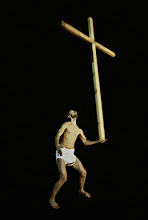

But if O’Shea and Chapple are sitting round the central hearth, I don’t think their dinner companions are all the artists in the SPILL Festival. Two of SPILL’s most high profile performers – Romeo Castellucci and Jan Fabre – have also shown some of the most controversial productions. Castellucci’s trilogy of Heaven, Hell and Purgatory was underpinned by a deep and poweful violence which left some audience members moved, others alienated. And Jan Fabre’s ‘Orgy of Tolerance’ set out to offend everyone in the theatre. ‘Fuck You!’ the performers shouted, at every social group imaginable; if you didn’t get offended for yourself, your anger was sure to be piqued on behalf of someone else you know. This work belongs to the realm of the further afield – the transitional zone that tests what is acceptable. This explains why, for me, Castellucci’s work was anchored in ritual. In ‘Inferno’, for example, huge swathes of people took to the stage and obeyed the same unspoken laws – walking, falling, hugging, killing; these hypnotic movements – like a visual chant – washed over the imperatives that were left unexplained, like a ritual that reaches out to an unknowable god. Perhaps this also explains what Fabre’s paradoxical title is getting at: where is the orgy, the excess, the vital controversy in a society that advocates tolerance? Tolerance is for the hearth; orgy is for the in-between place.


If there is a ‘nature’ in this extended metaphor, it could be the landscape of British theatre. Both defining culture and testing it, SPILL is already having an effect on the way we see the world beyond. The question is, what kind of effect will this be?


Mary Paterson is a writer and producer, and Co-Director of Open Dialogues. mary@opendialogues.com